
Free · No Login Required · Opens in a new tab
Production Release Risk & PR Checklist Generator: Streamlining Modern DevOps Deployments
In the fast-paced world of software engineering, deploying code changes to production environments is often fraught with hidden vulnerabilities.
Whether you are rolling out a minor database schema modification or launching an enterprise-grade microservice architecture, mitigating risks before code hits the live server is critical.
The Production Release Risk & PR Checklist Generator is a specialized, interactive DevOps utility designed to automate risk assessment, standardize pull request (PR) reviews, and generate comprehensive deployment packages on the fly.
Hosted seamlessly on your WordPress infrastructure, this tool acts as an automated technical assistant for software engineers, product owners, and on-call site reliability engineers (SREs).
By shifting risk evaluation from manual, error-prone spreadsheets into a dynamic interface, development teams can ensure absolute compliance with enterprise deployment pillars.
What is the Production Release Risk & PR Checklist Generator?
At its core, this utility is a single-file, client-side application engineered to evaluate the systemic risk of any software change.
Instead of relying on generic documentation templates, the Production Release Risk & PR Checklist Generator adapts in real-time based on specific architectural toggles selected by the developer.
When an engineer inputs their change parameters, the tool dynamically calculates an aggregate risk profile—categorizing the deployment into low, medium, or high risk—and compiles structured sections covering database migrations, asynchronous background payloads, caching strategies, and Kubernetes probe intervals.
It eliminates guesswork, standardizes code review requirements, and enforces clean operational boundaries.
Key Features and Architectural Pillars
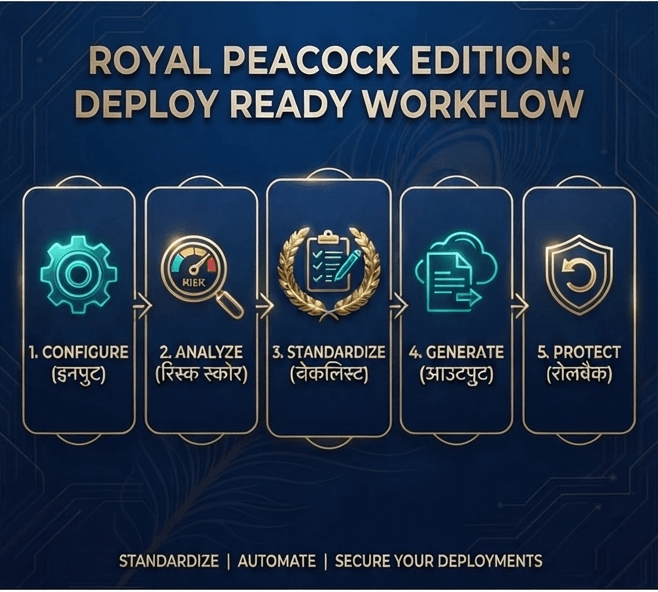
The Production Release Risk & PR Checklist Generator is structured around several critical engineering pillars that govern modern continuous integration and continuous deployment (CI/CD) pipelines.
1. 𝗗𝘆𝗻𝗮𝗺𝗶𝗰 𝗥𝗶𝘀𝗸 𝗔𝘀𝘀𝗲𝘀𝘀𝗺𝗲𝗻𝘁:The Production Release Risk & PR Checklist Generator automatically computes active risk factors based on selected application modifications, instantly updating the deployment classification.
2. 𝗥𝗼𝗹𝗹𝗼𝘂𝘁 𝗦𝘁𝗿𝗮𝘁𝗲𝗴𝘆 𝗠𝗮𝗻𝗮𝗴𝗲𝗺𝗲𝗻𝘁:The Production Release Risk & PR Checklist Generator supports diverse release mechanisms including staged feature flag rollouts, canary deployments, blue-green switches, rolling updates, and direct full-fleet replacements.
3. 𝗔𝘂𝘁𝗼𝗺𝗮𝘁𝗲𝗱 𝗥𝗼𝗹𝗹𝗯𝗮𝗰𝗸 𝗧𝗿𝗶𝗴𝗴𝗲𝗿𝘀:The Production Release Risk & PR Checklist Generator formulates precise telemetry thresholds—including error rate percentages, monitoring windows, and latency ceilings—to automate emergency rollbacks if production anomalies occur.
4. 𝗦𝘁𝗿𝘂𝗰𝘁𝘂𝗿𝗲𝗱 𝗣𝗥 𝗖𝗵𝗲𝗰𝗸𝗹𝗶𝘀𝘁𝘀:The Production Release Risk & PR Checklist Generator generates clean, copy-paste-ready markdown blocks designed to be embedded directly into GitHub or GitLab pull request descriptions.
How to Use the Production Release Risk & PR Checklist Generator Effectively
Operating the Production Release Risk & PR Checklist Generator requires zero backend configuration or command-line execution.Follow this step-by-step workflow to generate your deployment package.
𝗦𝘁𝗲𝗽 1: Define Change Basics Navigate to the tool interface and enter your unique identifier in the Change / service name field.Next, assign accountability by typing the handle of the designated engineer in the Who watches the first 15 minutes? input box.
𝗦𝘁𝗲𝗽 2: Configure Application Risk Factors Evaluate your code changes and toggle the relevant application risk options.If your update modifies database tables, enable the Database schema change toggle.Specify the exact operation, table name, and column headers.Similarly, toggle asynchronous worker updates, cache shape modifications, or cold-start capacity adjustments if your release impacts background queues.
𝗦𝘁𝗲𝗽 3: Establish Rollout and Rollback Parameters Select your preferred distribution method under the rollout strategy section.If utilizing a feature flag, input your flag identifier and sunset removal date.Define your safety thresholds by inputting the acceptable error rate percentage, evaluation time window in minutes, and performance latency ceiling.
𝗦𝘁𝗲𝗽 4: Review and Export the Package As you configure your inputs, the lower dashboard panels will dynamically synthesize your inputs into a structured report.Review the computed risk summary, verify the generated sections, and click the Copy full package or Copy this section buttons to instantly transfer the markdown content directly into your pull request.
Who Is This Production Release Risk & PR Checklist Generator For?
The Production Release Risk & PR Checklist Generator is built for anyone involved in the deployment process.
- Software Development Teams: Streamline deployment processes and ensure consistent, high-quality deployments.
- Project Managers: Ensure deployment projects stay on track and run smoothly.
- DevOps Teams: Ensure reliable and efficient deployments.
- Site Reliability Engineers (SREs): Enforce operational readiness before every launch.Whether you are a seasoned professional or just starting out, the Production Release Risk & PR Checklist Generator provides a helpful guide to ensure your deployments are successful and error-free.
Why Every Engineering Team Needs This Tool
- Software teams can save valuable hours of manual review by integrating a reliable Production Release Risk & PR Checklist Generator directly into their pull request workflow.
- Relying on manual checklists often leads to oversight, missed migration steps, and extended downtime during critical releases.
- By integrating this automated utility into your workflow, you establish a repeatable, auditable standard for every production push.
- It ensures that infrastructure boundaries are respected, team accountability is clearly established, and rollback triggers are defined long before a deployment goes live.
- When setting up your deployment pipelines, utilizing a Production Release Risk & PR Checklist Generator ensures that all critical validation gates are systematically cleared .
Best Practices for Mitigating Production Release Failures
- When deploying code changes to production environments, relying solely on automated scripts is rarely enough.
- Engineering teams must enforce strict operational disciplines to prevent catastrophic downtime and data loss.
- 𝗣𝗿𝗲 – 𝗗𝗲𝗽𝗹𝗼𝘆𝗺𝗲𝗻𝘁 𝗦𝗺𝗼𝗸𝗲 𝗧𝗲𝘀𝘁𝗶𝗻𝗴: Always validate your container builds and database migrations in a staging environment that mirrors production architecture down to the exact resource limits.
- 𝗙𝗲𝗮𝘁𝘂𝗿𝗲 𝗙𝗹𝗮𝗴 𝗜𝘀𝗼𝗹𝗮𝘁𝗶𝗼𝗻: Wrap experimental features inside feature flags so they can be toggled off instantly without requiring a full code rollback.
- 𝗗𝗮𝘁𝗮𝗯𝗮𝘀𝗲 𝗥𝗼𝗹𝗹𝗯𝗮𝗰𝗸 𝗦𝗰𝗿𝗶𝗽𝘁𝘀: Never execute a destructive schema modification without having a tested, reversible migration script prepared beforehand.
- 𝗥𝗲𝗮𝗹-𝗧𝗶𝗺𝗲 𝗧𝗲𝗹𝗲𝗺𝗲𝘁𝗿𝘆 𝗠𝗼𝗻𝗶𝘁𝗼𝗿𝗶𝗻𝗴: Keep your on-call SREs and engineering leads in the loop by tracking error rates, memory spikes, and latency ceilings during the critical first fifteen minutes post-release.
Common Mistakes This Production Release Risk & PR Checklist Generator Helps You Avoid
- Shipping a schema change and the code that depends on it in the same deploy.
- Renaming a queue payload field without a dual-write window.
- Changing a cached object’s shape without bumping a cache key version.
- Using a single readiness probe for an app that needs a long warm-up.
- Rolling out to all users at once when a feature flag was available.
- Leaving a feature flag in production long after the rollout finished.—
Frequently Asked Questions
𝟭.Is the Production Release Risk & PR Checklist Generator really free?
Yes. It runs entirely in your browser. There is no signup, no login, and no server-side storage.
𝟮.Does the Production Release Risk & PR Checklist Generator store my data?
No. All state lives in your browser tab. If you close the tab, the data is gone.
𝟯.What is a Go/No-Go gate?
A gate that blocks the release until every critical checklist item is complete. Until all critical items are ticked, the Production Release Risk & PR Checklist Generator shows BLOCKED.
𝟰.What makes a task critical?
Anything that can cause a production incident: schema changes, backward-incompatible payloads, cache shape changes, probe windows, and undefined rollback triggers.
𝟱.How is this different from a generic to-do list?
A to-do list records intent. The Production Release Risk & PR Checklist Generator derives a risk profile from your inputs and produces content specific to your change.
𝟲.Can I share my checklist with my team?
Yes. Use the ‘Copy shareable link’ button. It encodes your inputs into the URL.
𝟳.Can I download the output?Yes. Use ‘Copy full package’ to copy everything as Markdown, or use your browser’s print dialog to save the page as a PDF.
𝟴.Does it work on mobile?
Yes. The layout collapses to a single column on small screens.
𝟵.Why is there no AI auto-generation?
Because the value of the Production Release Risk & PR Checklist Generator is in its specificity, not free-form generation. Every output is deterministic and reviewable.
𝟭𝟬.What does the Production Release Risk & PR Checklist Generator NOT do?
It does not authenticate evidence, run your migration, execute a rollback, or replace a human decision.
Glossary of Terms
- 𝗦𝗥𝗘: Site Reliability Engineering — a discipline that applies software engineering to operations.
- 𝗦𝗟𝗢: Service Level Objective — a target level of reliability for a service.
- 𝗖𝗮𝗻𝗮𝗿𝘆 𝗗𝗲𝗽𝗹𝗼𝘆𝗺𝗲𝗻𝘁: Releasing to a small subset of users before a full rollout.
- 𝗕𝗹𝘂𝗲-𝗚𝗿𝗲𝗲𝗻 𝗗𝗲𝗽𝗹𝗼𝘆𝗺𝗲𝗻𝘁: Running two identical environments and switching traffic between them.
- 𝗥𝗼𝗹𝗹𝗯𝗮𝗰𝗸: Reverting a deployment to a previous known-good state.
- 𝗙𝗲𝗮𝘁𝘂𝗿𝗲 𝗙𝗹𝗮𝗴: A toggle that enables or disables functionality without redeploying code.
- 𝗘𝘅𝗽𝗮𝗻𝗱/𝗖𝗼𝗻𝘁𝗿𝗮𝗰𝘁 𝗠𝗶𝗴𝗿𝗮𝘁𝗶𝗼𝗻: A safe database migration pattern that adds, migrates, then removes.
About the Author
Deploy ReadyProduction engineering & release tooling.
Built from patterns observed across release checklists, SRE run books, and post-incident reviews. Focused on the small set of application-level decisions that a pipeline cannot make for you — schema compatibility, payload contracts, cache versioning, probe windows, and rollback authority.
Sources and References
- Google SRE — Reliable Product Launches at Scale
- AWS Well -Architected Framework — Operational Readiness
- Microsoft Azure Architecture Center — Progressive Exposure· NIST SSDF — Secure Software Development
- OWASP ASVS — Application Security Verification
- RFC 2606 — Reserved DNS Names—
Disclaimer
This Production Release Risk & PR Checklist Generator is built to assist engineering teams with deployment workflows and risk assessments.
While designed for high precision, software environments vary. Please independently verify all generated checklists, database commands, and rollback thresholds before executing live production changes. The site administrator assumes no liability for deployment errors or downtime.
We are continuously upgrading this technical utility to make it even more robust.
We Value Your Feedback
Did this tool help you?
Was it easy to use?
Do you have a suggestion for improvement?
Your feedback helps us make the Production Release Risk & PR Checklist Generator even better for everyone
.👉
Did this tool help you? We’d love your feedback!