
Welcome to the Advanced Frontier: Where True German Proficiency Begins
Congratulations on conquering the fundamentals of German grammar. You’ve navigated der, die, das, mastered present tense conjugations, and can construct basic sentences. This achievement places you at a critical juncture—the intermediate plateau. This is precisely where the language reveals its true intellectual depth and where casual learners separate from future fluent speakers. You’ve moved past the basics; now, the real adventure begins.
This comprehensive, 2800-word guide is your definitive roadmap to advanced German grammar mastery. It synthesizes essential concepts with deep-dive strategies, transforming theoretical knowledge into practical, usable skill. We’re moving beyond “correct sentences” to crafting precise, nuanced, and sophisticated communication. This journey to advanced German grammar mastery will equip you to argue, hypothesize, persuade, and express subtlety with near-native precision.
The Advanced Landscape: A Fundamental Shift in Your Language Relationship
Attaining advanced German grammar mastery represents more than learning new rules; it’s a paradigm shift. You’re transitioning from a language student to a language architect. The focus evolves from memorizing isolated formulas to understanding and manipulating complex, interlocking linguistic systems.
The Core Question Changes
The fundamental question is no longer,”Is this sentence grammatically correct?” but rather, “Is this the most precise, effective, and stylistically appropriate way to convey my meaning in this specific context?” This nuanced approach defines true advanced German grammar.
Navigating the World of Nuance This journey involves commanding several sophisticated domains:
• 𝗘𝘅𝗽𝗿𝗲𝘀𝘀𝗶𝗻𝗴 𝗛𝘆𝗽𝗼𝘁𝗵𝗲𝘁𝗶𝗰𝗮𝗹𝘀 & 𝗣𝗼𝗹𝗶𝘁𝗲𝗻𝗲𝘀𝘀: Using Konjunktiv II to discuss dreams, make nuanced requests, or explore counterfactual scenarios.
• 𝗠𝗮𝘀𝘁𝗲𝗿𝗶𝗻𝗴 𝗩𝗼𝗶𝗰𝗲 & 𝗣𝗲𝗿𝘀𝗽𝗲𝗰𝘁𝗶𝘃𝗲: Employing the Passiv (both Vorgangspassiv and Zustandspassiv) to achieve objectivity in academic writing or shift focus in narratives.
• 𝗔𝗰𝗵𝗶𝗲𝘃𝗶𝗻𝗴 𝗙𝗼𝗿𝗺𝗮𝗹 𝗣𝗿𝗲𝗰𝗶𝘀𝗶𝗼𝗻: Wielding the Genitiv case and its specific prepositions for elegant communication found in literature, legal documents, and high-register journalism.
• 𝗔𝗿𝗰𝗵𝗶𝘁𝗲𝗰𝘁𝗶𝗻𝗴 𝗖𝗼𝗺𝗽𝗹𝗲𝘅 𝗧𝗵𝗼𝘂𝗴𝗵𝘁: Weaving together multiple clauses with flawless, sometimes counter-intuitive, word order (Nebensätze) to build logical, sophisticated arguments.
• 𝗡𝗮𝘃𝗶𝗴𝗮𝘁𝗶𝗻𝗴 𝗡𝘂𝗮𝗻𝗰𝗲𝗱 𝗣𝗿𝗲𝗽𝗼𝘀𝗶𝘁𝗶𝗼𝗻𝘀: Moving beyond in, an, auf to master two-way prepositions (Wechselpräpositionen) and subtle differences between similar terms (während vs. binnen).
The path to advanced German grammar mastery requires abandoning rote learning and embracing analytical thinking and contextual practice. This guide provides the map and the toolkit.
Deconstructing the Pillars of Advanced German Grammar
True advanced German grammar mastery is built on four core pillars. Let’s dissect each with strategies that move from theory to instinctive use.
Pillar 1: Konjunktiv II – The Grammar of Imagination, Nuance, and Indirect Discourse
The subjunctive mood, or Konjunktiv II, is the heartbeat of sophisticated German. It transports you into the realm of the unreal, the polite, and the reported.
The Core Challenge & Nuance
Its forms cleverly mirror the simple past(Präteritum) of strong verbs (hätte, wäre, könnte, ginge), creating initial confusion. For weak verbs and in everyday speech, the würde + infinitive construction is prevalent. The art lies in knowing when to use which form for stylistic effect. Traditional forms often carry a formal or literary tone, while würde is standard in spoken language.
Detailed Strategy for Mastery·
𝗣𝗿𝗮𝗰𝘁𝗶𝗰𝗲 𝘄𝗶𝘁𝗵 𝗣𝘂𝗿𝗽𝗼𝘀𝗲𝗳𝘂𝗹 𝗖𝗼𝗻𝘁𝗲𝘅𝘁: Write structured paragraphs on hypothetical topics: “Describe the political changes you would implement as Bundeskanzler for a week.” Force yourself to use a strategic mix of both traditional and würde-forms.
• 𝗔𝗰𝘁𝗶𝘃𝗲 𝗟𝗶𝘀𝘁𝗲𝗻𝗶𝗻𝗴 𝗳𝗼𝗿 𝗡𝘂𝗮𝗻𝗰𝗲: In political talk shows (like Anne Will), note when a speaker uses Konjunktiv II: to soften a critical question (“Wären Sie mit diesem Ergebnis zufrieden?”), to express a polite request (“Könnten Sie das präzisieren?”), or to state an unreal condition (“Wenn die Finanzierung gesichert wäre, könnten wir sofort starten.”).
• 𝗠𝗮𝘀𝘁𝗲𝗿𝗶𝗻𝗴 𝗜𝗻𝗱𝗶𝗿𝗲𝗰𝘁 𝗦𝗽𝗲𝗲𝗰𝗵 (𝗜𝗻𝗱𝗶𝗿𝗲𝗸𝘁𝗲 𝗥𝗲𝗱𝗲): This is a critical application. Practice converting direct quotes into indirect speech, requiring a systematic shift to Konjunktiv I (for reporting facts) and Konjunktiv II (when Konjunktiv I is identical to the indicative). Sie sagte: “Ich habe keine Zeit.” becomes Sie sagte, sie habe/hätte keine Zeit.
Pillar 2: The Passive Voice – Shifting Focus with Authority and Objectivity
The passive voice is a strategic tool for professional and academic communication, non-negotiable for advanced German grammar mastery in fields like engineering, science, and law.
The Core Challenge – A Two-Fold System The primary hurdle is the distinction between:
1. 𝗩𝗼𝗿𝗴𝗮𝗻𝗴𝘀𝗽𝗮𝘀𝘀𝗶𝘃 (𝗣𝗿𝗼𝗰𝗲𝘀𝘀𝗶𝗻𝗴 𝗣𝗮𝘀𝘀𝗶𝘃𝗲): Describes an action being done. (Das Gesetz wird verabschiedet.)
2. 𝗭𝘂𝘀𝘁𝗮𝗻𝗱𝘀𝗽𝗮𝘀𝘀𝗶𝘃 (𝗦𝘁𝗮𝘁𝗲 𝗣𝗮𝘀𝘀𝗶𝘃𝗲): Describes the resultant state. (Das Gesetz ist verabschiedet.) A further nuance is the correct use of the agent withvon (personal agent) vs. durch (impersonal means).
Strategy for Mastery·
𝗧𝗿𝗮𝗻𝘀𝗳𝗼𝗿𝗺𝗮𝘁𝗶𝘃𝗲, 𝗧𝗵𝗿𝗲𝗲-𝗦𝘁𝗲𝗽 𝗘𝘅𝗲𝗿𝗰𝗶𝘀𝗲𝘀:
1. 𝗧𝗮𝗸𝗲 𝗮𝗻 𝗮𝗰𝘁𝗶𝘃𝗲 𝘀𝗲𝗻𝘁𝗲𝗻𝗰𝗲: Die Ingenieure testen das neue Modul.
2. 𝗖𝗼𝗻𝘃𝗲𝗿𝘁 𝘁𝗼 𝗩𝗼𝗿𝗴𝗮𝗻𝗴𝘀𝗽𝗮𝘀𝘀𝗶𝘃: Das neue Modul wird von den Ingenieuren getestet.
3. 𝗖𝗼𝗻𝘃𝗲𝗿𝘁 𝘁𝗼 𝗭𝘂𝘀𝘁𝗮𝗻𝗱𝘀𝗽𝗮𝘀𝘀𝗶𝘃: Das neue Modul ist (von den Ingenieuren) getestet. Omitting the agent shifts focus entirely—a common practice in scientific writing, showcasing true advanced German grammar skill.
Pillar 3: The Genitive Case – The Signature of Formal Proficiency and Precision
While sometimes circumvented colloquially, the Genitive case remains the hallmark of precise, formal, and literary advanced German grammar.
The Core Challenge
Mastering its unique article and adjective declensions(des klaren Wassers) and the specific prepositions that govern it (während, wegen, trotz, anstelle, zwecks)
Strategy for Mastery·
𝗘𝗹𝗲𝘃𝗮𝘁𝗲 𝗬𝗼𝘂𝗿 𝗙𝗼𝗿𝗺𝗮𝗹 𝗪𝗿𝗶𝘁𝗶𝗻𝗴: Intentionally use Genitive constructions in formal emails or essays. Replace die Entscheidung von der Abteilung with the elegant die Entscheidung der Abteilung.
• 𝗣𝗮𝘁𝘁𝗲𝗿𝗻 𝗥𝗲𝗰𝗼𝗴𝗻𝗶𝘁𝗶𝗼𝗻 & 𝗠𝗻𝗲𝗺𝗼𝗻𝗶𝗰𝘀: Group Genitive prepositions by meaning: Time (während), Cause (wegen), Concession (trotz). This thematic association aids long-term memory.
• 𝗧𝗵𝗲 “𝗚𝗲𝗻𝗶𝘁𝗶𝘃𝗲 𝗼𝗳 𝗠𝗲𝗮𝘀𝘂𝗿𝗲𝗺𝗲𝗻𝘁”: Use this elegant construction: eines Tages (one day) instead of an einem Tag for literary flair.
Pillar 4: The Symphony of Clauses – Mastering Complex Sentence Architecture (Nebensätze)
The ability to craft sophisticated sentences with multiple dependent clauses separates intermediate from advanced speakers—the engineering core of advanced German grammar mastery.
The Core Challenge
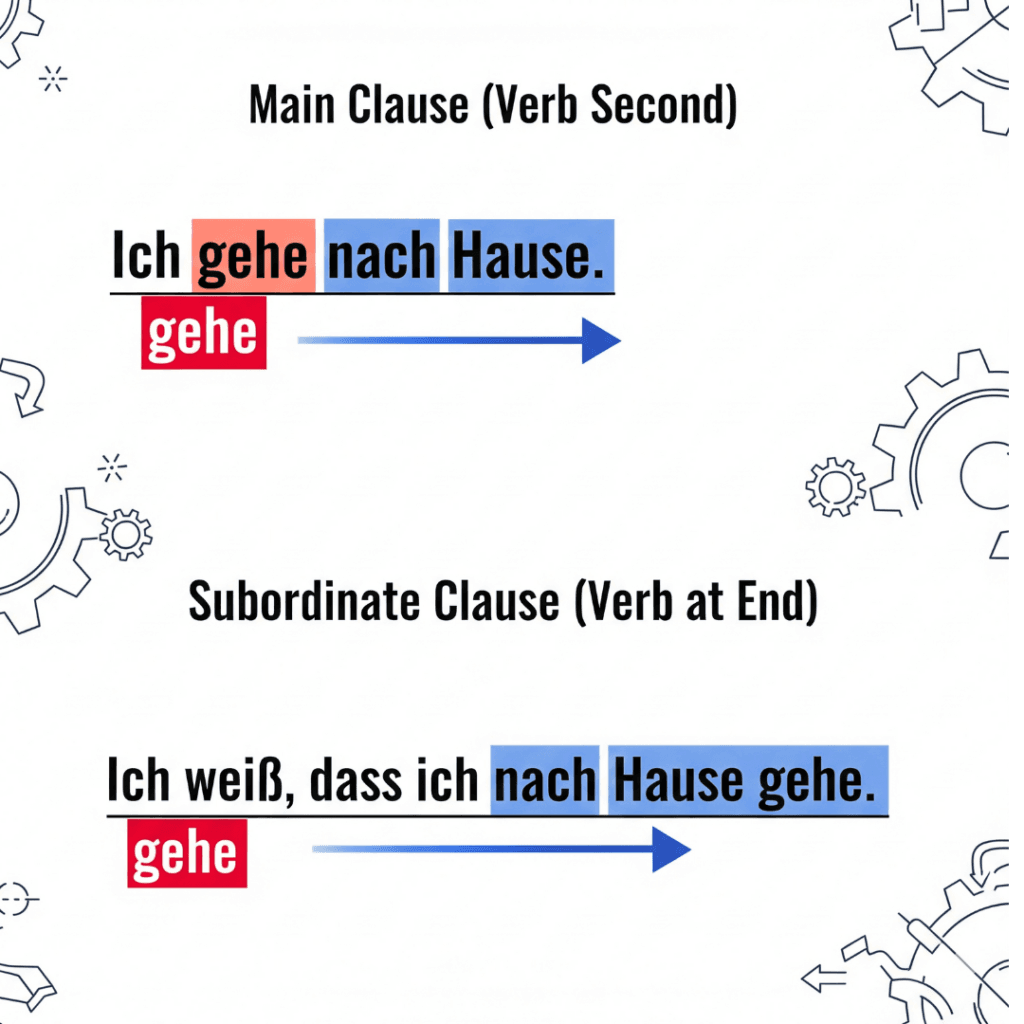
German’s rigid word order in subordinate clauses sends the conjugated verb to the very end.Managing this with multiple clauses (dass, weil, obwohl) requires mental discipline.
Strategy for Mastery·
𝗦𝗲𝗻𝘁𝗲𝗻𝗰𝗲 𝗕𝘂𝗶𝗹𝗱𝗶𝗻𝗴 𝗕𝗹𝗼𝗰𝗸𝘀: Start with a main clause and systematically add subordinate clauses: Ich lerne Deutsch. -> Ich lerne Deutsch, weil ich in Berlin arbeiten möchte. -> Ich lerne Deutsch, weil ich in Berlin arbeiten möchte, obwohl es schwer .
• 𝗣𝘂𝗻𝗰𝘁𝘂𝗮𝘁𝗶𝗼𝗻 𝗣𝗿𝗲𝗰𝗶𝘀𝗶𝗼𝗻: Remember the mandatory comma before every subordinate clause in German writing.
• 𝗨𝗺-𝘇𝘂 𝘃𝘀. 𝗗𝗮𝗺𝗶𝘁 𝗖𝗼𝗻𝘀𝘁𝗿𝘂𝗰𝘁𝗶𝗼𝗻𝘀: Understand the nuanced difference: Ich spare Geld, um ein Auto zu kaufen. (concise) vs. Ich spare Geld, damit ich mir ein Auto kaufen kann. (explicit).
The Hidden Nuances: Partizipialattribute & Advanced Indirect
𝗦𝗽𝗲𝗲𝗰𝗵 𝗠𝗮𝘀𝘁𝗲𝗿𝘆
Beyond the main pillars, true advanced German grammar mastery involves wielding tools that add conciseness and formal elegance. These are often the “secret weapons” of proficient writers.
Partizipialattribute: The Art of Concise Description
APartizipialattribut is a participial phrase (using Partizip I or II) that functions like an adjective to describe a noun. It replaces a relative clause, making your language more dynamic and compact.
• 𝗕𝗮𝘀𝗶𝗰 𝗖𝗹𝗮𝘂𝘀𝗲: Der Mann, der am Fenster steht, ist mein Kollege.
• 𝗪𝗶𝘁𝗵 𝗣𝗮𝗿𝘁𝗶𝘇𝗶𝗽𝗶𝗮𝗹𝗮𝘁𝘁𝗿𝗶𝗯𝘂𝘁 (𝗘𝗹𝗲𝗴𝗮𝗻𝘁 & 𝗔𝗱𝘃𝗮𝗻𝗰𝗲𝗱): Der am Fenster stehende Mann ist mein Kollege. Mastering this requires nailing the adjective endings.Practice by converting relative clauses in news articles into these sleek constructions—a sure sign of advanced German grammar proficiency.
Indirect Speech (Indirekte Rede) Beyond Basics
While introduced in Konjunktiv II,advanced mastery involves handling its complexities:
• 𝗧𝗲𝗻𝘀𝗲 𝗛𝗮𝗿𝗺𝗼𝗻𝘆: When the reporting verb is in the past, the reported speech must shift. Er sagt: “Ich kann kommen.” (present) -> Er sagte, er könne kommen. (present subjunctive) or more commonly in spoken German, Er sagte, er könnte kommen. (Konjunktiv II).
• 𝗣𝗿𝗼𝗻𝗼𝘂𝗻 & 𝗔𝗱𝘃𝗲𝗿𝗯 𝗦𝗵𝗶𝗳𝘁𝘀: “Ich komme hierher,” sagte sie. -> Sie sagte, sie komme dorthin. Systematic practice with transforming dialogues from interviews into formal reported speech is an unparalleled exercise foradvanced German grammar mastery.
The Engine of Mastery: Structured, Analytical Practice
Understanding theory is merely step one. The engine of true advanced German grammar mastery is consistent, challenging, and analytical practice.
Error-Diagnosis Exercises
Advanced learning is about playing detective.Work with texts containing subtle, embedded errors—a misplaced nicht in a clause, an overused passive. Finding and correcting these hones proofreading skills to near-native levels.
Context-to-Rule Translation
Reverse-engineer sentences from complex texts likeFrankfurter Allgemeine commentaries. Ask: “Why did the author use Konjunktiv II here? Why is this noun in the Genitive?” This analytical approach deepens understanding.
The “Why” Behind the “What”
Superior resources foradvanced German grammar don’t just provide answers; they provide commentaries explaining the grammatical rationale and stylistic implications, helping you build an internal rulebook.
A Strategic Study Framework for Advanced Learners
To systematically achieve advanced German grammar mastery, integrate this disciplined weekly routine:
1. Focused Deep Dive (2x/week, 60 mins)Select one topic(e.g., Zustandspassiv).
Review its rules (20 mins), then complete 3-4 exercises progressing from transformation to free production in a short paragraph.
2. Authentic Input Analysis (1x/week, 45 mins)
Actively dissect an op-ed or research abstract.Highlight passive uses, circle subjunctive forms, underline Genitive constructions, and bracket subordinate clauses. This connects advanced German grammar to real-world application.
3. Deliberate, Constrained Output (2x/week, 30 mins)
Write or speak with a self-imposed constraint:”Today, I will write an email of complaint using two passive constructions and one polite Konjunktiv II request.” This focused practice is key for advanced German grammar mastery.
4. Reflective Review & Error Logging (1x/week, 30 mins)
Maintain an”Advanced Error & Insight Journal.” Don’t just log mistakes; analyze them. Why did it happen? What rule applies? Document breakthroughs—the first time you naturally used a Partizipialattribut (der gerade angekommene Zug) correctly. This metacognition accelerates learning.
Common Pitfalls on the Path to Advanced German Grammar Mastery
Awareness of these traps is your first defense:
Overusing würde
While useful,relying solely on würde + infinitive for all subjunctive situations makes language clunky. Practice the traditional forms of common verbs (hätte, wäre, könnte, müsste) until automatic.
Passive Avoidance
Many learners,fearing complexity, overuse active voice even when passive is more appropriate (e.g., in scientific descriptions). Force yourself to practice the passive.
The “Dative Genitive” Trap
In informal speech,you’ll hear wegen dem Wetter instead of wegen des Wetters. For advanced German grammar mastery in writing and formal speech, the Genitive is required.
Clause Confusion
Stringing too manydass or weil clauses creates a confusing “ball of yarn” sentence. Learn to vary connectors (aus diesem Grund, infolgedessen) and break thoughts into multiple sentences for clarity.
From Learner to Practitioner: The Essential Mindset Shift
The final frontier in advanced German grammar mastery is psychological: shifting from student to confident practitioner and stylist.
Embrace Complexity as Beauty
See a long compound noun or a nested subordinate clause not as a threat,but as an intricate puzzle to be appreciated, decoded, and mastered.
Prioritize Precision Over Avoidance
Instead of circumventing a difficult structure,actively seek it out. The conscious effort to correctly use the Zustandspassiv or a formal Genitive phrase with zwecks forges genuine fluency.
Seek Intellectual Joy in the System
Find pleasure in the logical consistency of theFutur II tense (Ich werde angekommen sein) or the elegant efficiency of a well-placed Partizipialattribut. This intrinsic motivation is the ultimate fuel for advanced German grammar mastery.
Your Next Chapter in German Awaits
The path to advanced German grammar mastery is intellectually demanding but profoundly rewarding. It unlocks the ability to engage with German culture, academia, journalism, and professional spheres at their highest levels. It transforms your relationship with the language from a functional tool to a medium for sophisticated thought and expression.
This guide has mapped the territory, detailed the strategies, and warned of the pitfalls. The next step—consistent, disciplined, curious practice—is yours. Commit to engaging with the language at this deeper, analytical level. Seek resources designed for this stage: rigorous exercise collections focusing on error correction and style, authentic texts that challenge you, and conversations that push beyond small talk.
Begin Your Mastery Today
The world of advanced German grammar awaits—not as an obstacle, but as a new landscape to explore and conquer. Dive into the complexities, embrace the nuances, and start building the advanced German proficiency that will truly set you apart. Your journey from intermediate to fluent starts with the decision to master the details.