
Monk Mode — the name might bring to mind images of a solitary hermit, disconnected from the world. But in reality, in today’s hyper-connected digital age, Monk Mode is a practical and powerful tool for anyone looking to profoundly transform their productivity, creativity, and mental peace. This article will not only explain its principles but also provide you with a step-by-step blueprint that I have personally seen work in my own life and the lives of hundreds of others. This isn’t just theory; it’s a practical experience.
What is Monk Mode? A Modern Redefinition
In simple terms, Monk Mode is a conscious process of removing all irrelevant and distracting elements from your life for a fixed period to channel all your energy toward a single goal. But to truly understand it, we need to go a bit deeper.
From my personal experience, when I first tried Monk Mode for 21 days, my goal was to complete the first draft of an entire book. Previously, I would write for 4-5 hours a day but with very little output. Why? Because every 10 minutes there was a notification, every hour the urge to check email, and constant “just checking” of social media would break my focus. Upon entering Monk Mode, I found myself in a state where I could write deeply for 3-4 hours in a single sitting. The result? The same book draft that was supposed to take 3 months was completed in just 21 days.
From a scientific perspective, Monk Mode helps create a healthy balance between our brain’s “Default Mode Network” (DMN) and the “Task-Positive Network” (TPN). The DMN is active when our mind is wandering, thinking about the past or future, and is often linked to anxiety and stress. The TPN activates when we focus on a specific task. Constant digital interruptions trap us in the DMN. Monk Mode is a deliberate effort to train and strengthen the TPN.
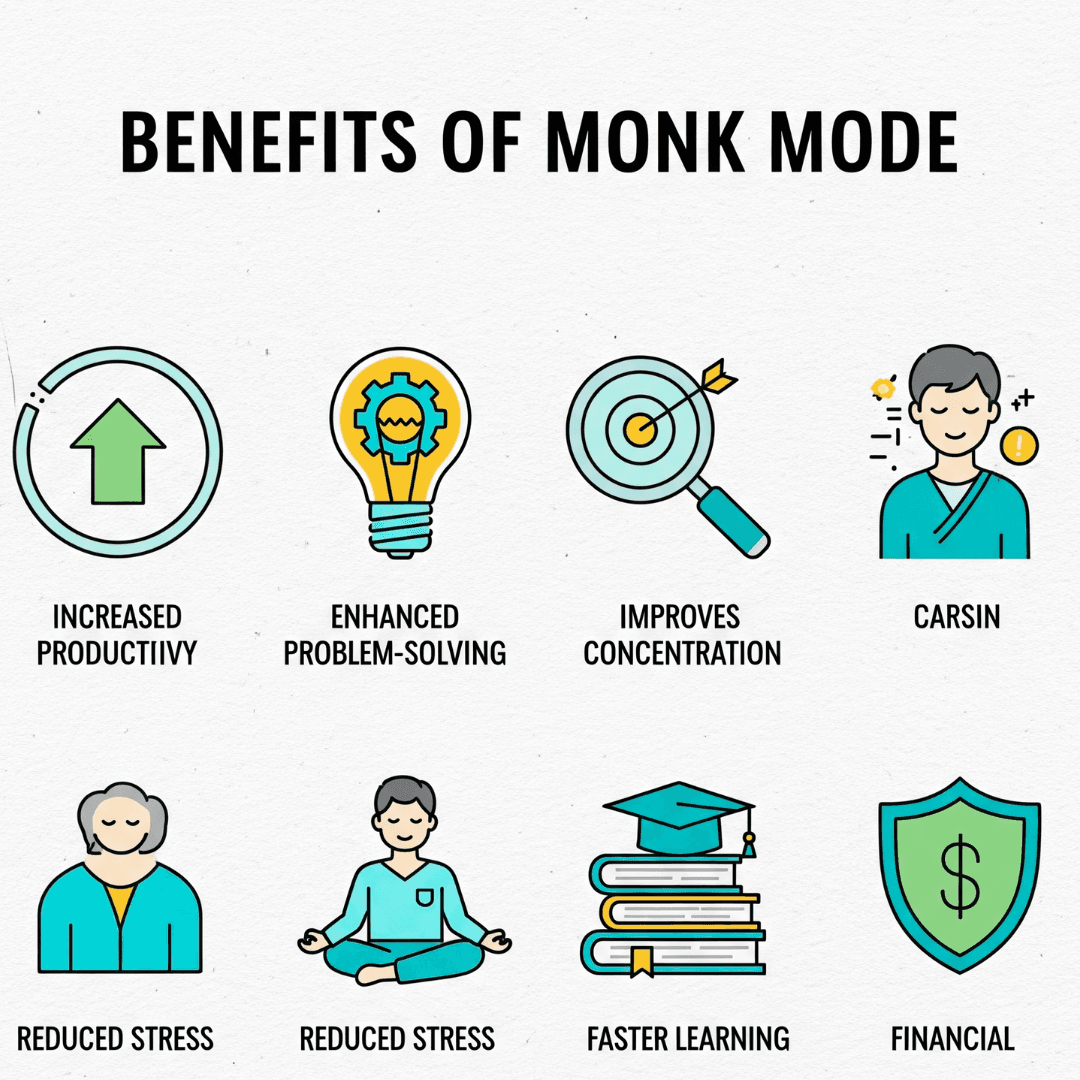
The Scientific and Mental Benefits of Monk Mode: Beyond Just Finishing Work
𝟭. 𝗗𝗲𝗲𝗽 𝗖𝗼𝗴𝗻𝗶𝘁𝗶𝘃𝗲 𝗥𝗲𝘀𝘁𝗿𝘂𝗰𝘁𝘂𝗿𝗶𝗻𝗴 𝗮𝗻𝗱 𝗡𝗲𝘂𝗿𝗼𝗽𝗹𝗮𝘀𝘁𝗶𝗰𝗶𝘁𝘆 : When you practice Monk Mode consistently over many days, you are essentially rewiring your brain’s neural pathways. It’s the principle of “fire together, wire together.” Repeating deep focus strengthens the neural connections related to concentration and discipline. It’s like a mental muscle you strengthen daily through exercise.
𝟮 . 𝗥𝗲𝗱𝘂𝗰𝗲𝗱 𝗦𝘁𝗿𝗲𝘀𝘀 𝗮𝗻𝗱 𝗘𝗺𝗼𝘁𝗶𝗼𝗻𝗮𝗹 𝗦𝘁𝗮𝗯𝗶𝗹𝗶𝘁𝘆 : Have you noticed how irritable and stressed you feel when you have ten unfinished tasks running simultaneously? Monk Mode is the exact opposite of that feeling. Focusing on one thing at a time brings an extraordinary clarity and peace to the mind. Cortisol (the stress hormone) levels decrease, and endorphin (the happiness hormone) release improves because you are making progress and feeling a sense of accomplishment.
𝟯. 𝗢𝘃𝗲𝗿𝗰𝗼𝗺𝗶𝗻𝗴 𝗗𝗲𝗰𝗶𝘀𝗶𝗼𝗻 𝗙𝗮𝘁𝗶𝗴𝘂𝗲: We make thousands of small and big decisions every day—what to wear, what to eat, which email to reply to, which video to watch. This causes “decision fatigue.” In Monk Mode, you have already made most of the decisions: your goal, schedule, and environment are set. This conserves your mental energy, allowing you to apply it solely to your main task.
𝟭• 𝗤𝘂𝗮𝗹𝗶𝘁𝘆 𝗥𝗲𝘀𝘁 𝗮𝗻𝗱 𝗦𝗹𝗲𝗲𝗽: An unexpected benefit of Monk Mode is that it improves your sleep quality. When you work fully present throughout the day without guilt or anxiety, your mind doesn’t churn over unfinished tasks at night. You can sleep more deeply and restfully, which becomes the energy source for the next day.
Essential Preparation Before Starting Monk Mode: Mental Decluttering
• 𝗗𝗶𝗴𝗶𝘁𝗮𝗹 𝗜𝗻𝘃𝗲𝗻𝘁𝗼𝗿𝘆 : Make a list of all apps and subscriptions on your phone and computer. Ask yourself for each one: “Does this directly contribute to my current goal?” If not, prepare to delete it or turn off notifications.
• 𝗣𝗵𝘆𝘀𝗶𝗰𝗮𝗹 𝗖𝗹𝗲𝗮𝗻𝘂𝗽 : Clean your workspace and surrounding area. Remove papers, unnecessary items, and distracting objects. A clean space encourages a clear mind.
• 𝗦𝗼𝗰𝗶𝗮𝗹 𝗡𝗼𝘁𝗶𝗰𝗲: Inform your family, close friends, and colleagues that you will be working with deep focus on an important project for the next X days and your availability will be limited. This will reduce stress from unavailability.
Step-by-Step Guide: Successful Monk Mode in 7 Steps
Step 1: Radical Clarity in Goal Setting
“Creating a course” is not a goal. “Creating a complete 10- module online course over the next 30 days, including 30 minutes of video content and one worksheet per module” is a clear goal. Write down your goal and make it visible—put it as a wallpaper or place it in front of your desk.
Step 2: Choosing the Timeframe – What’s Right for You?
• 𝗠𝗶𝗻𝗶-𝗦𝗽𝗿𝗶𝗻𝘁 (𝟳 𝗱𝗮𝘆𝘀): Suitable for quick results or a specific deadline. Example: Preparing a comprehensive report.
• 𝗦𝘁𝗮𝗻𝗱𝗮𝗿𝗱 𝗧𝗿𝗮𝗻𝘀𝗳𝗼𝗿𝗺𝗮𝘁𝗶𝗼𝗻 (𝟮𝟭-𝟯𝟬𝗱𝗮𝘆𝘀): The golden standard of Monk Mode. This is enough time for a new habit to take root and to see solid results.
• 𝗗𝗲𝗲𝗽 𝗗𝗶𝘃𝗲 (𝟲𝟬-𝟵𝟬 𝗱𝗮𝘆𝘀): For a permanent lifestyle change. During this period, the practices of Monk Mode begin to become a natural part of your routine.
Step 3: Surgical Removal of Distractions – A Zero Tolerance Policy
• 𝗣𝗵𝗼𝗻𝗲 : Uninstall social media, news, and gaming apps. Turn off notifications completely (leave only calls and messages). Keep your phone outside your work room.
𝗖𝗼𝗺𝗽𝘂𝘁𝗲𝗿 : Use website blockers (like Cold Turkey, Freedom). Close the email client and check it only at two fixed times during the day.
• 𝗘𝗻𝘃𝗶𝗿𝗼𝗻𝗺𝗲𝗻𝘁: Use noise- canceling headphones. Put a “Focus Session in Progress” sign on your door.
Step 4: Sanctifying Your Routine – Like a Sacred Ritual
Your routine should be your greatest strength.
• 𝗠𝗼𝗿𝗻𝗶𝗻𝗴 𝟱:𝟯𝟬 -𝟲:𝟬𝟬: Wake up, hydrate, practice 10 minutes of meditation or deep breathing. Prepare the mindset for maintaining focus.
• 𝗠𝗼𝗿𝗻𝗶𝗻𝗴 𝟲:𝟯𝟬 – 𝟭𝟬:𝟯𝟬: Deep Work Block 1. This is your most precious time. Follow a Pomodoro cycle (90 minutes work, 20 minutes rest).
𝗠𝗼𝗿𝗻𝗶𝗻𝗴 𝟭𝟬:𝟯𝟬- 𝟭𝟭:𝟬𝟬 : Active rest—take a walk, do light stretching. Do not look at any screen.
· 11:00 AM – 1:00 PM: Deep Work Block 2.
· 1:00 PM – 2:00 PM: Nutritious lunch. Eat mindfully.
· 2:00 PM – 4:00 PM: Light Work Block (emails, administrative tasks).
· After 4:00 PM: Exercise, time for family/self, reading. Turn off all screens one hour before sleep.
Step 5: Energy Management – You Are the Fuel, Not the Machine
𝗡𝘂𝘁𝗿𝗶𝘁𝗶𝗼𝗻: Avoid heavy, sugary meals and excessive caffeine. Eat light, nutritious food. Drink enough water.
• 𝗘𝘅𝗲𝗿𝗰𝗶𝘀𝗲: At least 30 minutes of physical activity (walk, yoga, workout) daily is essential. This increases blood flow to the brain.
• 𝗦𝗹𝗲𝗲𝗽: 7-8 hours of deep sleep is non-negotiable. This is the foundation of your Monk Mode.
Step 6: Tracking and Reflection – Data is Power
𝗞𝗲𝗲𝗽 𝗮 𝗷𝗼𝘂𝗿𝗻𝗮𝗹. 𝗪𝗿𝗶𝘁𝗲 𝗱𝗮𝗶𝗹𝘆:
• What did I complete today?
• What was my focus level on a scale of 1-10?
•What challenge came up?
• One thing I can do better tomorrow.
This reflection will help you constantly adjust and improve.
Step 7: Reintegration – Making Monk Mode a Part of Life
When your Monk Mode period ends, take a day to analyze your experience. Which habits do you want to incorporate into your normal life? Perhaps the morning deep work block or the evening digital detox. Make Monk Mode a recurring tool, not a one-time event.
A Real-World Example: Sarah’s 30- Day Monk Mode
Let’s look at Sarah, a graphic designer who felt overwhelmed and unable to build her portfolio. She decided on a 30-day Monk Mode with the goal of creating 15 high-quality portfolio pieces.
𝗛𝗲𝗿 𝗣𝗿𝗼𝗰𝗲𝘀𝘀:
• 𝗪𝗲𝗲𝗸 𝟭 (𝗧𝗵𝗲 𝗦𝘁𝗿𝘂𝗴𝗴𝗹𝗲): The first few days were hard. The urge to scroll Instagram was strong. She used a website blocker and told her clients about her reduced availability. By day 7, her focus during work blocks improved.
• 𝗪𝗲𝗲𝗸 𝟮 (𝗙𝗶𝗻𝗱𝗶𝗻𝗴 𝗙𝗹𝗼𝘄): She settled into her routine. The deep work blocks became productive. She completed 5 portfolio pieces. The journal helped her see progress, which boosted motivation.
• 𝗪𝗲𝗲𝗸 𝟯 & 𝟰 (𝗠𝗼𝗺𝗲𝗻𝘁𝘂𝗺): Focus came naturally. She finished the remaining 10 pieces and even had time to set up a simple website. The clear goal and distraction-free environment were key.
𝗧𝗵𝗲 𝗥𝗲𝘀𝘂𝗹𝘁: Not only did Sarah have a complete portfolio, but she also landed two new clients within a week of finishing her Monk Mode. More importantly, she regained confidence in her ability to complete deep work.
Common Monk Mode Mistakes and How to Avoid Them
𝟭. 𝗨𝗻𝗿𝗲𝗮𝗹𝗶𝘀𝘁𝗶𝗰 𝗚𝗼𝗮𝗹𝘀: Aiming to learn a new language in 7 days.
𝗦𝗼𝗹𝘂𝘁𝗶𝗼𝗻: Choose a goal that is challenging but achievable. Break it into smaller sub-goals.
𝟮. 𝗣𝗲𝗿𝗳𝗲𝗰𝘁𝗶𝗼𝗻𝗶𝘀𝗺: Giving up the entire effort after missing a day or losing focus.
𝗦𝗼𝗹𝘂𝘁𝗶𝗼𝗻: Adopt the 80/20 rule. 80% consistency is brilliant enough. Start fresh the next day.
𝟯. 𝗡𝗲𝗴𝗹𝗲𝗰𝘁𝗶𝗻𝗴 𝗣𝗵𝘆𝘀𝗶𝗰𝗮𝗹 𝗖𝗮𝗿𝗲: Sitting continuously, eating junk food.
𝗦𝗼𝗹𝘂𝘁𝗶𝗼𝗻: Schedule exercise and healthy meals as non-negotiable time blocks.
𝟰. 𝗦𝗼𝗰𝗶𝗮𝗹 𝗜𝘀𝗼𝗹𝗮𝘁𝗶𝗼𝗻: Cutting off friends and family completely.
𝗦𝗼𝗹𝘂𝘁𝗶𝗼𝗻: Inform them in advance. Plan one social activity at a fixed time per week (like Sunday dinner with family).

Conclusion: Monk Mode is a Journey, Not a Destination
The ultimate goal of Monk Mode is not just to complete a project. It is the process of teaching yourself how to remain the master of your attention, time, and energy in this distracting world. When you complete your Monk Mode journey, you will find that you have not only acquired a skill or finished a task but have reached a new level of self-awareness, discipline, and inner peace. This is the gift that Monk Mode gives you—a gift that will continue to enrich your entire life.
👉 Are you ready to start your Monk Mode journey? Comment below with what your goal is, and we will encourage you! Or, share your experience on how Monk Mode has changed your life.